
Dishwasher Troubleshooting: Easy Solutions To Common Problems
Fri Jan 16 2026
- Kitchen
- Appliances
When your dishwasher isn’t working properly, it can quickly disrupt your daily routine. From dishes coming out dirty to cycles that won’t start, dishwasher issues are frustrating, but many problems can be resolved without calling for service right away.
This guide focuses on dishwasher troubleshooting, helping you identify common dishwasher problems, understand why they happen, and apply quick fixes that restore performance. For homeowners, renters, and busy families alike, knowing how to troubleshoot a dishwasher can save time, money, and stress. Here are key recommendations from the dishwasher experts at Queen City Homestore.
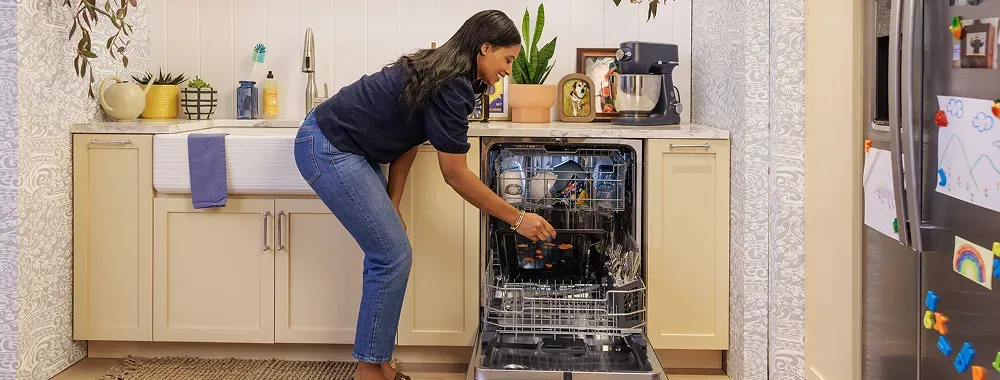
Start With the Basics: Quick Dishwasher Checks
Before diving into specific issues, begin with a few simple checks that often resolve minor dishwasher problems.
-
Confirm the dishwasher is receiving power
-
Ensure the door is fully closed and latched
-
Check that the correct cycle and settings are selected
-
Make sure water supply valves are open
These quick steps eliminate common user-error issues and help narrow down the cause.
Dishwasher Not Cleaning Dishes Properly
Why Are My Glasses Cloudy or Spotty?
Cloudy or spotty glassware is a common dishwasher issue and can usually be traced back to water quality, detergent use, or cycle settings. The key is identifying whether the problem is temporary buildup or permanent damage.
Hard Water Spots and Mineral Buildup
If your glasses have white spots or a cloudy film that can be wiped away, hard water is often the culprit. Minerals like calcium and magnesium can cling to glass as water evaporates, leaving residue behind.
To help reduce hard water spotting:
-
Use a vinegar rinse occasionally to break down mineral deposits
-
Make sure the dishwasher’s filter and spray arms are clean
-
Avoid overcrowding, which can prevent proper rinsing
If hard water is common in your area, consistent maintenance and proper detergent selection can make a noticeable difference.
Etching: When Cloudiness Is Permanent
If the cloudy appearance does not come off with cleaning, the glass may be etched. Etching is permanent damage caused by a breakdown of the glass surface itself.
Common causes of etching include:
-
Using too much detergent
-
Washing glasses in very hot water
-
Over-softened water that becomes overly aggressive on glass
To prevent etching:
-
Use the recommended detergent amount only
-
Choose gentler or glass-specific wash cycles
-
Avoid high-heat drying when washing delicate glassware
Once etching occurs, it cannot be reversed, but adjusting your dishwasher habits can prevent further damage.
The Importance of Rinse Aid
Rinse aid plays a major role in preventing spots and cloudiness. It helps water sheet off dishes instead of forming droplets that dry into mineral marks.
For best results:
-
Keep the rinse aid dispenser filled
-
Adjust the rinse aid level if spotting persists
-
Pair rinse aid use with proper loading and cycle selection
If cloudy or spotty glasses continue despite these adjustments, it may be time to evaluate whether your dishwasher is delivering consistent water pressure and temperature, or if an upgrade would better suit your household’s needs.
Troubleshooting a Smelly Dishwasher: Odor Causes and Cures
Unpleasant dishwasher odors are usually a sign that food particles or moisture are lingering where they shouldn’t. The good news is that most odor issues can be resolved with simple, routine maintenance.
Food Traps That Cause Odors
Over time, small bits of food can collect in areas that aren’t always visible, including the filter, sump, and spray arms. When debris builds up, it creates the perfect environment for bacteria and odor-causing residue.
To reduce buildup:
-
Remove and rinse the dishwasher filter regularly
-
Check spray arm holes for trapped food or mineral debris
-
Wipe out the bottom of the tub to remove lingering particles
Keeping these components clean helps prevent smells from developing in the first place.
Simple Monthly Cleaning Fixes
A quick monthly cleaning routine can go a long way toward keeping your dishwasher fresh.
Try one of these easy options:
-
Place a dishwasher-safe cup filled with white vinegar on the top rack and run a hot, empty cycle
-
Sprinkle baking soda across the bottom of the tub and run a short, hot cycle
-
Use a dishwasher cleaner designed to break down grease and residue
These methods help neutralize odors while also removing grease and mineral buildup.
Don’t Forget the Door Seals
The rubber gasket around the dishwasher door often traps moisture, food residue, and grime. Because it stays damp, it’s a common source of lingering smells.
Use a damp cloth or mild cleaning solution to wipe:
-
The rubber door seal
-
The edges of the door
-
The inner lip of the tub
Regular attention to the door seals helps eliminate hidden odor sources and keeps your dishwasher smelling clean between cycles.
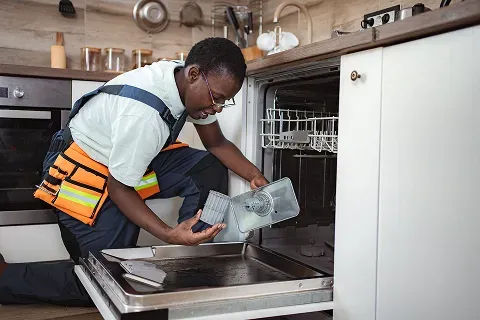
Dishwasher Not Draining Properly
If water remains in the bottom of your dishwasher after a cycle, drainage issues may be the cause. This is a common dishwasher problem that often has a simple explanation.
Potential reasons include:
-
Clogged drain filter or hose
-
Garbage disposal blockage
-
Kinked drain line
How to Troubleshoot Drainage Issues
-
Clean the filter and check for food debris
-
Inspect the drain hose for bends or blockages
-
Run the garbage disposal to clear shared plumbing
If drainage problems persist, it may indicate the dishwasher is reaching the end of its service life. To learn more about handling this issue, head to our blog, Dishwasher Stopped Draining? Follow Our 3 Easy Tips.
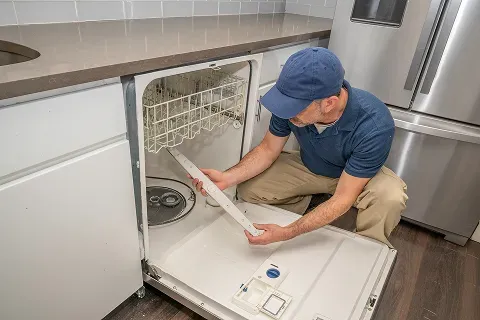
Why Is My Dishwasher Not Drying?
Drying issues are one of the most common frustrations homeowners experience with dishwashers, especially when dishes come out warm but still wet. This issue is common and often related to settings rather than hardware failure.
Common causes:
-
Heated dry or drying aid settings turned off
-
Rinse aid levels too low
-
Plastic items retaining moisture
Dishwasher Drying Quick Fixes
-
Enable heated drying or extended dry options
-
Refill rinse aid to improve moisture evaporation
-
Open the door slightly after the cycle to release steam
Modern dishwashers often rely on condensation drying, making proper settings essential for best results.
Dishwasher Won’t Start or Turn On
A dishwasher that won’t start can feel like a major problem, but it’s often tied to safety features or power issues.
Common causes include:
-
Door latch not fully engaged
-
Tripped circuit breaker
-
Delayed start activated unintentionally
What to Check First to Start Your Dishwasher
-
Firmly close the door and listen for a click
-
Reset the breaker if necessary
-
Cancel delayed start settings
If these steps don’t resolve the issue, it may indicate a control or sensor issue.
Dishwasher Making Unusual Noises
Some noise during operation is normal, but loud grinding or rattling sounds can indicate dishwasher problems that need attention.
Possible causes:
-
Loose utensils or dishes contacting spray arms
-
Debris caught in the pump
-
Improper loading
How to Reduce Dishwasher Noise
-
Secure lightweight items
-
Remove debris from the filter area
-
Ensure dishes aren’t blocking moving components
Addressing noise early can prevent further wear and damage.
Dishwasher Leaking Water
Leaks can stem from worn seals or improper loading. While alarming, leaks don’t always mean immediate replacement is required.
Common reasons include:
-
Damaged door gasket
-
Excessive detergent suds
-
Improperly aligned dishes
Quick Dishwasher Leaking Troubleshooting Steps
-
Inspect and clean the door seal
-
Use only dishwasher-approved detergent
-
Re-arrange dishes to prevent water deflection
Persistent leaks may indicate it’s time to consider a new dishwasher.
When Dishwasher Troubleshooting Isn’t Enough
While many dishwasher issues are fixable, there are times when replacing the appliance makes more sense than continued repairs.
Consider replacement if:
-
Problems occur frequently despite maintenance
-
Cleaning performance no longer meets needs
-
Energy and water efficiency are poor
Exploring new dishwashers can provide quieter operation, improved cleaning, and better efficiency.
Queen City Homestore offers a range of built-in dishwashers and portable dishwashers designed to fit different kitchens and lifestyles.
Maximize Dishwasher Longevity: Your Essential Maintenance Checklist
Routine care not only keeps your dishwasher performing at its best but can also extend its lifespan. Following a simple maintenance schedule helps prevent buildup, odors, and performance issues over time.
Monthly Maintenance Checklist
A few quick monthly habits can make a noticeable difference in how well your dishwasher runs.
-
Clean the filter: Remove and rinse the filter to eliminate trapped food particles that can affect drainage and cleaning performance.
-
Wipe the door seal: Use a damp cloth to clean the rubber gasket where moisture and debris tend to collect.
-
Check spray arm rotation: Make sure spray arms spin freely and that the holes aren’t blocked by food residue or mineral deposits.
These small tasks help maintain proper water flow and consistent cleaning results.
Quarterly or Semi-Annual Deep Cleaning
In addition to monthly upkeep, deeper inspections a few times a year can prevent long-term wear.
-
Run an acid-based cleaner cycle: This helps dissolve mineral buildup caused by hard water and keeps internal components running efficiently.
-
Inspect the drain hose connection (if accessible): Look for kinks or buildup that could restrict drainage.
-
Check racks for rust or damage: Address chipped rack coating early to prevent rust from spreading and impacting dishes.
Scheduling these checks a couple of times a year supports reliable performance and reduces the risk of unexpected issues.
Pre-Scrape vs. Pre-Rinse: What’s Really Necessary?
Many homeowners wonder whether dishes need to be rinsed before loading. In most modern dishwashers, pre-scraping is enough. Removing large food scraps helps prevent clogs, while pre-rinsing can actually reduce cleaning effectiveness because detergents are designed to work with some food residue present.
By scraping instead of rinsing, you save water while allowing your dishwasher to operate as intended.

Upgrade Your Dishwasher with Confidence at Queen City Homestore
If troubleshooting hasn’t resolved your dishwasher problems, upgrading to a new model can restore convenience and efficiency to your kitchen. Explore the latest dishwashers at Queen City Homestore to find options that deliver reliable cleaning and modern features.
Upgrade your home living space today with appliances that combine style, convenience, and performance, including selections from top brands in refrigeration, cooking, laundry, and more. For the best selection of dishwashers and other kitchen appliances across the Carolinas, visit your nearest Queen City showroom location.
With personalized service, top brands, competitive prices, and financing options, Queen City is your go-to place for upgrading your dishwasher with peace of mind.
Related readings from our blog:
FAQs: Dishwasher Troubleshooting: Easy Solutions To Common Problems
Why is my dishwasher not cleaning dishes well?
This is often caused by clogged filters, blocked spray arms, or improper loading. Regular cleaning and correct detergent use usually resolve the issue.
Why won’t my dishwasher start?
Check the door latch, power supply, and settings like delayed start. Many startup issues are related to safety features.
Why is my dishwasher not drying dishes?
Low rinse aid levels, disabled heated dry settings, or condensation drying design can affect drying performance.
How often should I clean my dishwasher?
Cleaning the filter monthly and wiping seals regularly helps prevent dishwasher problems and improves longevity.
When should I replace my dishwasher instead of repairing it?
If issues persist, repairs are frequent, or performance no longer meets household needs, replacement may be the most cost-effective solution.
Related Articles