
Foam, Spring, or Hybrid? How to Choose the Right Mattress for You
Thu Mar 19 2026
- Mattresses
Choosing the right mattress can feel overwhelming with so many options. Foam, spring, and hybrid mattresses each offer unique benefits in comfort, support, and durability for people in the Carolinas. Understanding the differences helps you make a confident purchase and ensures a good night’s sleep.
This guide will break down the main mattress types, compare their features, and give practical advice for selecting the one that best fits your sleeping style and lifestyle.
Summary (Key Takeaways):
Foam mattresses offer contouring support and motion isolation, spring mattresses provide traditional bounce and breathability, and hybrid mattresses combine the benefits of both. Choosing the right mattress depends on sleep position, comfort preferences, and durability needs. Understanding these differences helps shoppers make an informed decision for long-term comfort.
Foam Mattresses: Contouring Comfort for Side Sleepers and Pressure Relief
Memory foam mattresses mold to your body, relieving pressure points and providing motion isolation, perfect for couples and people with joint pain. Look for high-density foams for long-term durability.
Pros:
-
Excellent pressure relief
-
Reduces motion transfer
-
Quiet, no springs to squeak
Cons:
-
Can sleep warm (look for gel-infused or ventilated foam)
-
May feel too “sinking” for some side sleepers
Memory Foam vs. Polyfoam
Memory foam contours deeply, relieving pressure points, especially ideal for side sleepers or anyone with joint pain. Polyfoam is lighter and more responsive, often offering a budget-friendly alternative while still delivering comfort.
Motion Isolation
Foam excels at reducing motion transfer, which is perfect for couples or households with restless sleepers.
Temperature Considerations
Traditional foam can trap heat, but modern designs include gel-infused or open-cell foam for better airflow, helping you stay cool through the night.
Ideal For:
-
Side sleepers, couples, and people with chronic pain
-
Smaller bedrooms where quiet operation matters
Innerspring Mattresses: Traditional Support
Innerspring mattresses, commonly known as “traditional” mattresses, use coils to provide support and airflow. Pocketed coils reduce motion transfer compared to traditional Bonnell coils.
Pros:
-
Strong support for heavier sleepers
-
Cooler sleep due to airflow
-
Usually more affordable
Cons:
-
Can feel bouncy, less contouring
-
Motion transfer may still occur in lower-end models
Airflow & Cooling
The open design of spring mattresses allows air to circulate, keeping the mattress cooler than most foams.
Durability & Support
Spring mattresses are generally firmer and provide strong support for back and stomach sleepers. The bounce is useful for repositioning in bed or for heavier body types.
Ideal For:
-
Back and stomach sleepers
-
Those who prefer a firmer feel and traditional mattress bounce
Hybrid Mattresses: Best of Both Worlds
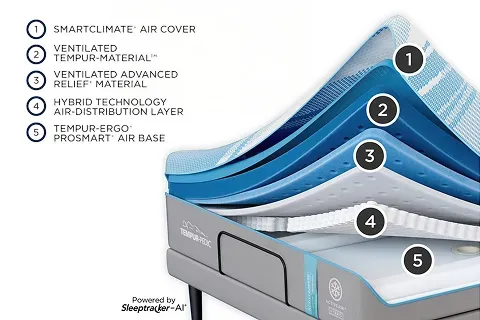
Hybrid mattresses combine the contouring comfort of foam with the supportive bounce of innerspring coils. Many include layers designed to improve airflow and pressure relief.
Pros:
-
Balanced comfort and support
-
Good temperature regulation
-
Often ideal for couples with different preferences
Cons:
-
Can be heavier and harder to move
-
Usually higher price point
Layer Composition
A soft foam or latex top layer provides comfort, while the coil base ensures support and responsiveness. This combination works for most sleep positions and body types.
Versatile Comfort
Hybrids adapt to different sleeping positions and preferences, making them an excellent choice for couples with differing needs.
Cooling Options
Many hybrids include gel or airflow layers to help regulate temperature, making them a good option for warm sleepers.
Ideal For:
-
Combination sleepers who need both support and comfort
-
Couples with different firmness preferences
Contouring Comfort: Who Benefits Most from Foam Mattresses?
Memory foam mattresses are best known for their deep contouring comfort, meaning they adapt closely to your body’s shape and help relieve pressure points. This makes them especially appealing for side sleepers and anyone dealing with joint or back discomfort.
Because foam distributes weight evenly, it can also reduce motion transfer, ideal for couples who don’t want to feel each other moving during the night.
How size impacts performance:
In larger mattress sizes like king mattresses, contouring becomes even more beneficial because there’s more surface area to absorb movement. Couples often find that a king-size foam mattress provides better motion isolation compared to a queen, especially if one partner is a restless sleeper. However, in smaller spaces, a queen foam mattress still delivers excellent pressure relief while being more practical for room layout.
Considerations:
-
Foam can retain heat, though newer models include cooling technologies
-
Edge support may feel softer, particularly in all-foam designs
-
Larger sizes may feel slightly less supportive near the edges without reinforced construction
Traditional Support: The Reliability of Innerspring Mattresses
Innerspring mattresses offer what many shoppers describe as traditional support, a more responsive, lifted feel created by steel coil systems. This design promotes airflow and provides a firmer surface that’s easier to move on, making it a strong option for back and stomach sleepers.
How size impacts performance:
With innerspring mattresses, coil distribution matters more in larger sizes. A king mattress typically includes more coils, which can improve weight distribution and reduce sagging over time, especially important for couples. In contrast, a queen innerspring mattress may feel slightly firmer overall due to a more compact coil system, which some sleepers prefer.
Considerations:
-
More bounce and responsiveness compared to foam
-
Better airflow, which helps with cooling
-
Motion transfer can be more noticeable, especially in smaller sizes without advanced coil systems
Balanced Performance: Why Hybrid Mattresses Offer the Best of Both Worlds
Hybrid mattresses combine contouring comfort and traditional support, using a coil base with foam or latex comfort layers. This creates a balanced feel that works well for a wide range of sleepers.
Hybrids are often the go-to choice for shoppers who want pressure relief without sacrificing support or airflow.
How size impacts performance:
Hybrid mattresses tend to scale best across different sizes, making them a strong option for both queen and king beds. In a king-size hybrid, the combination of coils and foam helps maintain consistent support across the entire surface, which is especially beneficial for couples with different sleep preferences. Meanwhile, a queen hybrid mattress offers a similar feel but may have slightly less room for motion separation compared to a king.
Considerations:
-
Typically more expensive than foam or innerspring options
-
Heavier, especially in king sizes
-
Offers the most versatility across sleep positions and body types
Motion Isolation vs. Space: Choosing the Right Size for Your Sleep Style
Beyond mattress type, bed size plays a major role in comfort and performance—especially for couples or families.
-
Queen mattresses are the most popular choice because they balance space and affordability. They work well for single sleepers or couples who don’t mind a closer sleep environment.
-
King mattresses provide significantly more personal space, which enhances motion isolation and overall comfort, particularly when paired with foam or hybrid designs.
For households in the Carolinas, where larger primary bedrooms are common, upgrading to a king-size mattress can noticeably improve sleep quality, especially when combined with materials designed for motion control and pressure relief.
Cooling, Durability, and Longevity: Do Materials Perform Differently by Size?
While mattress materials largely determine performance, size can influence how those materials wear over time.
-
Foam mattresses in larger sizes may benefit from reinforced edges to prevent sagging
-
Innerspring and hybrid mattresses often perform better in king sizes due to increased coil counts and improved weight distribution
-
Larger mattresses may last longer for couples because weight is spread more evenly across the surface
Regardless of size, choosing high-quality materials and proper support (like a compatible foundation) is key to maximizing mattress lifespan.
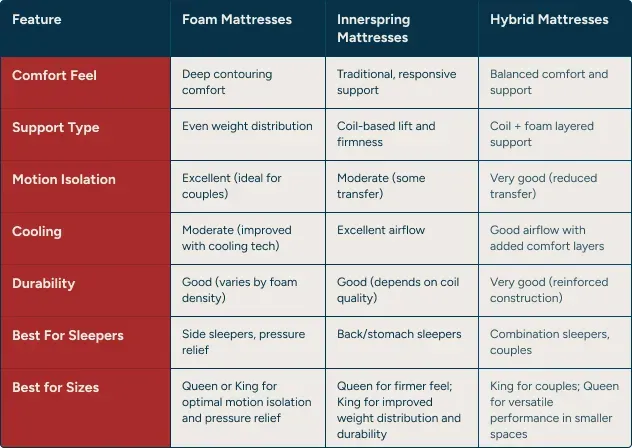
Foam vs Spring vs Hybrid: Quick Comparison Table
Lifestyle & Sleep Considerations
Your mattress choice should reflect your lifestyle and habits:
-
Sleep Position: Side sleepers generally prefer foam, back sleepers hybrids or springs, and stomach sleepers firmer support.
-
Partner Disturbance: Motion-isolating foam or hybrid mattresses help prevent partner disturbance.
-
Room Temperature: Choose mattresses with cooling technologies if you sleep hot.
-
Household Use: Durable options like hybrid or spring mattresses withstand higher use, especially with pets or kids.
Durability, Warranty, and Investment
-
Lifespan: Foam mattresses typically last 8-12 years, spring mattresses 7-10 years, and hybrids 10-12 years.
-
Warranties: Look for comprehensive coverage that protects your investment.
-
Value: Investing in an anchor piece like a hybrid mattress often provides the best long-term comfort and durability. Foam mattresses can be a more affordable starting point without compromising basic support.
Quick Mattress Type Comparison
-
Foam: Conforms to the body, reduces motion, pressure relief, may retain heat.
-
Spring: Bouncy, ventilated, traditional feel, firm support.
-
Hybrid: Balanced comfort and support, versatile, cooling layers available.
Regional Considerations: North & South Carolina Homes
Humidity levels in NC and SC can affect mattress longevity, especially foam and hybrid models. Ensuring proper airflow, using a mattress protector, and rotating your mattress regularly can prevent sagging and moisture buildup. Spring mattresses generally ventilate better in high-humidity climates, but hybrids with gel-infused foams also perform well.
Next Steps: Try Before You Buy
At Queen City Homestore, we provide local expertise and hands-on experience. Visiting our Charlotte, NC, or SC showrooms allows you to test foam, spring, and hybrid mattresses in person. Our experts help match your sleep preferences with the right mattress type. We offer:
-
Flexible financing options
-
Professional delivery and setup
-
Local customer support
For the best selection of appliances across the Carolinas, visit your nearest Queen City showroom location. With personalized service, top brands, competitive prices, and financing options, Queen City is your go-to place for mattress solutions.
Related readings from our blog:
FAQs: Foam, Spring, or Hybrid? How to Choose the Right Mattress for You
Is a hybrid mattress better than memory foam?
It depends on your priorities. Hybrids offer a balance of foam comfort and coil support, while memory foam focuses on contouring and pressure relief.
How long should a mattress last?
High-quality foam or hybrid mattresses typically last 8-12 years; innerspring models may last 6-8 years depending on usage.
Do I need to flip my mattress?
Most modern mattresses are one-sided and only need rotating. Check the manufacturer’s guidance for optimal durability.
Can foam mattresses sleep hot?
Standard memory foam may retain heat, but gel-infused or ventilated options improve airflow and sleep temperature.
Related Articles