
What Is the Difference Between Induction and Electric Ranges?
Wed Dec 17 2025
- Kitchen
- Homeowner Basics
- Appliances
Choosing the right range for your kitchen is a key decision that affects both cooking performance and convenience. With so many options available, it’s important to understand the differences between induction ranges and electric ranges. Both offer precise cooking control, sleek designs, and easy cleanup, but they use different technologies to deliver heat and cook your meals efficiently.
In this guide, we’ll break down how induction and electric ranges work, highlight their unique features, and help you determine which style best fits your kitchen and cooking habits.
How Induction Ranges Work
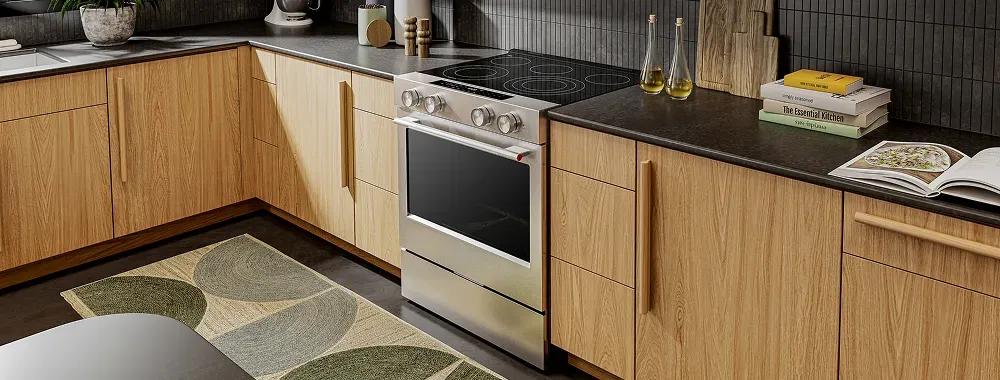
Induction ranges and induction cooktops use electromagnetic energy to directly heat your cookware, instead of heating the surface of the cooktop. This means:
-
Faster cooking times: Heat transfers directly to the pan, so your food heats up quickly.
-
Precise temperature control: Induction ranges respond instantly to adjustments, giving you professional-level cooking accuracy.
-
Safe, cool surfaces: The cooktop itself stays relatively cool, reducing the risk of burns and making cleanup easier.
Induction ranges are compatible with magnetic cookware, which allows for the efficient transfer of energy to your pots and pans.
How Electric Ranges Work
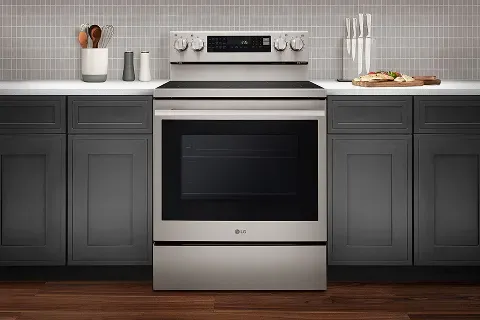
Electric ranges and electric cooktops rely on heated coils or elements to cook food. The heat is transferred from the element to the cookware, providing consistent and reliable results. Key features include:
-
Consistent, Even heating: Modern electric ranges are designed for uniform cooking across all burners.
-
Smooth glass cooktops: Many electric ranges feature glass surfaces that are easy to wipe down and maintain.
-
User-Friendly design options: Electric ranges come in freestanding, slide-in, or drop-in configurations to fit a variety of kitchen layouts.
Key Differences Between Induction and Electric Ranges
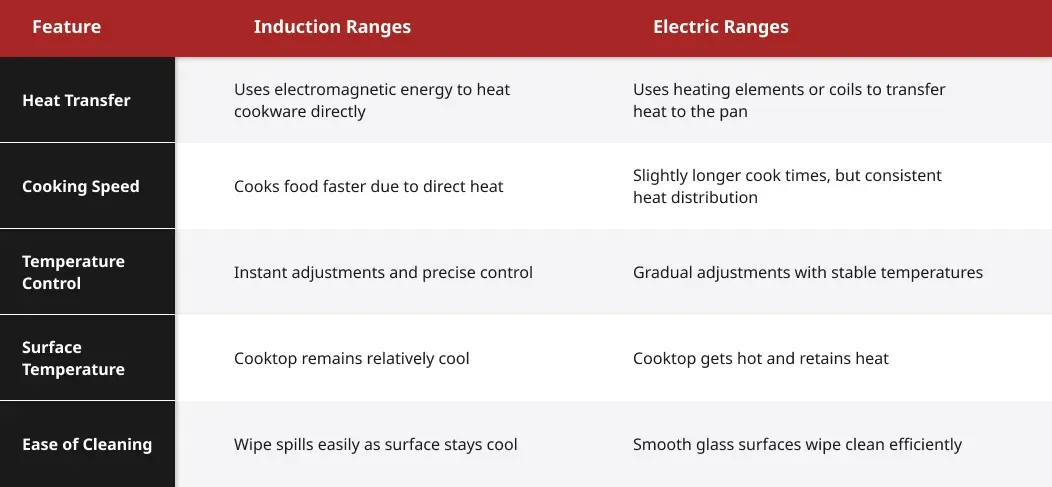
Here’s a breakdown of how these two technologies differ in ways that matter most to home cooks:
Benefits of Induction Ranges
Induction ranges offer several advantages that make them a popular choice for modern kitchens:
-
Energy-efficient cooking: Direct heat transfer to your cookware minimizes wasted energy, helping reduce utility costs while cooking efficiently.
-
Fast cooking and precise control: Induction heats up almost instantly and adjusts temperature in real-time, making it perfect for recipes that require precision, from delicate sauces to searing steaks.
-
Safe to use: Because the cooktop itself stays relatively cool, the risk of accidental burns is lower, making it family-friendly and safer for multitasking while cooking.
-
Easy cleanup: Spills don’t burn onto the surface because the cooktop stays cool, allowing you to wipe them away quickly.
-
Sleek, modern design: Smooth glass tops and minimalist controls enhance kitchen aesthetics and complement contemporary appliances.
-
Versatile cooking features: Many induction ranges include touch controls, timers, and booster burners that cater to both everyday meals and more advanced culinary techniques.
Benefits of Electric Ranges
Electric ranges are a versatile choice for many kitchens and offer features designed to enhance cooking convenience:
-
Consistent, even heating: Electric elements deliver steady heat, which is excellent for baking, simmering, or slow-cooking recipes that require uniform temperature.
-
Multiple style options: Freestanding, slide-in, and drop-in electric ranges make it easy to match your kitchen layout and personal style preferences.
-
Ease of maintenance: Smooth glass surfaces are simple to clean, and many models include self-cleaning ovens for added convenience.
-
User-friendly operation: Electric ranges are straightforward to use, making them ideal for both beginner cooks and seasoned home chefs.
-
Modern technology integration: Many models include convection ovens, programmable cooking modes, and digital controls, enhancing cooking precision and convenience.
-
Reliable everyday performance: Electric ranges consistently deliver dependable heat for a wide variety of cooking tasks, making them a versatile addition to any kitchen.
Which Type of Range Is Right for Your Kitchen?
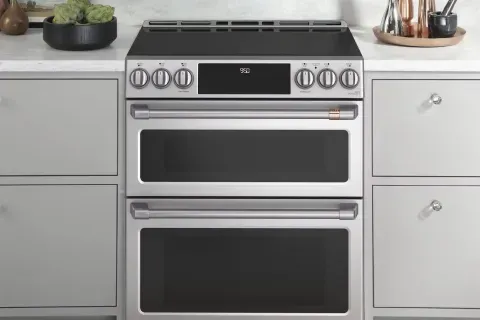
Your final decision should reflect your cooking style, budget, and kitchen setup:
Choose an Induction range if you want:
-
Fast cooking and instant temperature changes
-
High efficiency and lower heat transfer to the room
-
A safer, cooler cooktop surface
-
Modern features and design
-
Professional-level performance
Choose Electric if you want:
-
A budget-friendly option
-
Classic, consistent cooking results
-
Compatibility with any cookware
-
A simple, reliable appliance
Both induction and electric ranges offer sleek designs that integrate beautifully into modern kitchens, and both are available in freestanding and slide-in models at Queen City Homestore.
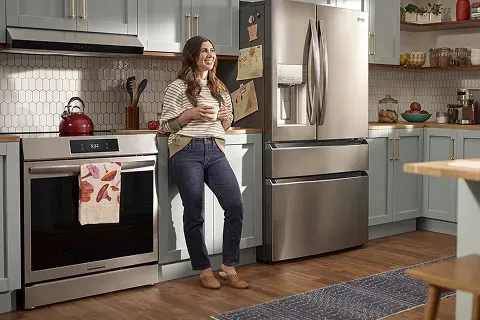
Compare Induction and Electric Ranges at Queen City Homestore
Whether you prefer the speed and precision of induction ranges or the reliable performance of electric ranges, Queen City Homestore has the perfect option for your kitchen. Explore our full collection of ranges and cooktops to find the ideal fit for your home. We offer high-quality cooking appliances, including wall ovens, cooktops, range hoods, and more from top brands in the industry.
Upgrade your kitchen today with appliances that combine style, convenience, and performance. For the best selection of ranges and cooking appliances across the Carolinas, visit your nearest Queen City showroom location.
With personalized service, top brands, competitive prices, and financing options, Queen City is your go-to place for home cooking appliance solutions.
Related readings from our blog:
FAQs: What Is the Difference Between Induction and Electric Ranges?
What is the main difference between induction and electric ranges?
Induction ranges use electromagnetic energy to heat cookware directly, while electric ranges use heated elements to transfer heat.
Are induction ranges faster than electric ranges?
Yes. Induction ranges heat pots and pans directly, which allows food to cook faster compared to traditional electric elements.
Do I need special cookware for induction ranges?
Yes. Induction requires magnetic-bottom cookware such as cast iron or stainless steel to function properly.
Can I clean induction and electric ranges the same way?
Both surfaces are smooth and easy to wipe down, but induction ranges stay cooler, making them safer for quick spill cleanup.
Are induction ranges energy-efficient?
Yes. Induction uses direct heat transfer, reducing wasted energy compared to electric elements.
Related Articles